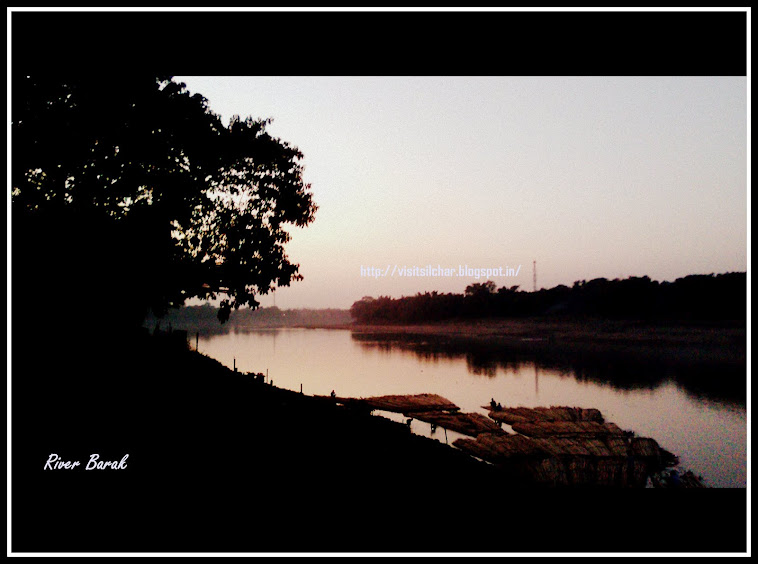
River Barak

River Barak
River Barak
Showing posts with label History. Show all posts

Wednesday, January 2, 2013

NIT SILCHAR

National Institute Of Technology Silchar (NIT Silchar) , an Institute of National Importance under the NIT Act was established in 1967 as a Regional Engineering College (REC), Silchar. NIT Silchar is situated on the banks of river Barak. In the year 2002, it was upgraded to the status of an NIT from a Regional Engineering College(REC).
Regional Engineering College, Silchar was established in 1967 as a joint venture of Government of India and Government of Assam under the administration of a society registered under Society Registration Act XXI of 1860. The college was transformed into National Institute of Technology in the year 2002, and bestowed with the status of Deemed University by the Ministry of Human Resource and Development.
The multifarious reforms -that are being introduced from then by the reformed Board of Governors, delegated with a greater degree of autonomy for exercising its deliberation over diverse issues pertaining to cardinal matters ranging from academic to extracurricular excellence, are bringing about a tangible difference in the rudimentary paradigm of achieving a high standard in engineering education.
Identified as a Centre of Excellence by the Government of India, the institute is reinventing itself to crush the competition from its cotemporaries in various domains. Very optimistic developmental programs have been undertaken towards modernization of laboratories, computing facilities and library automation. Use of advanced teaching aids and computing facilities provide extensive scope for the students to attain a very high standard required in present day fast changing scenario of technology.
The campus of the institute is spread over an area of 540 acres, set amidst a sprawling landscape of natural quiteness, bordered on expansive tea gardens. It presents a spectacle of harmony in modern architecture, natural beauty and picturesque surroundings.
The campus area has been organized in three functional sectors:

  • Hostels for students
  • Instuctional buildings and administrative block
  • Residential sectors for the staff
  • The instructional buildings have been so located that these are fairly near to both the hostels and the staff quarters. There is a full-fledged computerized branch of State Bank of India, a Post-Office, and a number of telephone booths with STD/ISD facilities in the campus. The Institute has its own Dispensary with full-time and contractual basis Medical Officers to attend to the regular medical needs of the students, staff and their families. Patients suffering from serious illness, requiring intensive care, are referred to the Silchar Medical College & Hospital, which is only about two kilometers from the campus. An adequately equipped Canteen is there near the instructional zone and two more buildings for this purpose are under consideration one of which is now complete which will provide facilities to the students and the staff during and beyond the working hours. There is a well-eqipped Gymkhana and a Students Activity Center which are utilized by students for activities like bodybuilding, indoor games and similar other pursuits. At present, for the extra-curricular activities of the students and staff, there is an Institute hall with a sitting arrangement for an audience of around 500. The institute has 2 buses, which make morning and evening trips to Silchar town. City buses and Auto rickshaws ply between Silchar town and the institute campus.
    Functionally and aesthetically spread out, the campus aims at intellectual growth in an ambience that is free-flowing and community-frendly. The soothing breeze rustling through the naturally gifted lustrous greenery and bluish lakes is just one of the several ingredients that create an amzing atmosphere; just the right conditions essential to concentrate on studies.

    National Institute of Technology, Silchar, Assam, India, PIN:-788010
    Phone:-03842- 224879 | Fax:-03842-224797

    Wednesday, May 16, 2012

    Bhasha Saheed

    On 19th May, 1961, in Silchar, a small town of South Assam in North East India
    witnessed another fight for the Bengali language and 11 people died in police firing
    to protest against the forcible imposition of Assamese on the Bangla speaking people there as a state policy. The provincial government of Assam had restricted the use of Bengali in the education of the Bengalis of Assam, despite that Bengali was their mother tongue. For this reason, on 19th May 1961 the Bengali students and youth plunged into satygraha revolution in Shilchar in order to protect their mother tongue. Again, that day the brutal Assamese police killed 11 spirited students and youth by open gunfire. The martyrs of 19th May gave their everything for the language and later the Government had to back down. Due to constant pressure from the Bengali students and youth, the Assamese provincial government was likewise compelled to recognize Bengali as the second official language of the state. Kamala Bhattacharjee, who died for right of bengali language on that day is being regarded as the first woman martyr of the world for language ! Besides Kamala Bhattacharjee, there were more 10 martyrs are Shachindra Paul, Saitendra Deb, Hitesh Biswas, Tarani Deb Nath,Birendra Sutradhar,Sunil Sarkar,Kanailal Niyagi,Kumud Ranjan Das, Sukumar Purkaysta, Chandricharan Sutrahar.

     Source: http://tripura4u.com/v2/?p=609

    Kamala Bhattacharya


    Kamala Bhattacharya (Bengali: কমলা ভট্টাচার্য) was an Indian student who was martyred in the Bengali Language Movement in Silchar in 1961.

    Early life

    Kamala was born to Ramraman Bhattacharya and Suprabasini Devi, the fifth of seven children in the year 1945 in the erstwhile Sylhet district in Assam. In their family they were three sons and four daughters. She was the third of the four daughters, having a younger sister and a younger brother. Their family had to struggle through many hardships, after she lost her father early in her childhood. During the Partition of India, the district of Sylhet was acceded to Pakistan on the basis of Sylhet referendum. In the 1950 East Pakistan genocide, hundreds of Hindus were killed in Sylhet and they migrated to India in large numbers. Kamala's mother too migrated to Silchar in the Cachar district in the year 1950.
    Kamala's family used to stay in a rented accommodation in Silchar Public School Road. Her eldest sister Benu took up a nursing job and went to Simaluguri for training. Kamala's elder sister Pratibha was a school teacher. Her family was economically dependent on her earning for their livelihood. In her childhood, Kamala attended the Chhotelal Seth Institute in Silchar. She did not have the financial stability to buy the school text books. She had once asked her eldest sister Benu to buy her a dictionary for her, which her sister could not afford. She used to borrow books from her classmates and copy the text and read them. In 1961, Kamala appeared for the matriculation exams. She was determined to complete her graduation and had planned to learn typewriting before the matriculation results were declared.

    Martyrdom

    The very next day after the matriculation exams, a picketing was being organized in Silchar railway station demanding Bengali as the medium of education. On the morning of 19th May, after taking bath Kamala wore the saree of her elder sister Pratibha and prepared to go to picketing. Her elder sister warned her of possible dangers. In the meanwhile, a group of 20-22 girls came to their house to take her. They alleviated her mother's concerns and took Kamala along with them. Kamala's mother gave her a piece of cloth to defend herself from tear gas. Kamala's younger sister Mangala, younger brother Bakul and her nephew Bappa too accompanied the group. Later during the day, Kamala's mother herself went to the railway station to enquire about their whereabouts. Bakul and Bappa had once been arrested by the police and then released. Kamala washed her mother's feet of the dust, gave her a sharbat and then sent her back home.
    The rail blockade programme had passed off peacefully in the morning. In the afternoon, the Assam Rifles had began to arrive at the railway station. At around 2-35 P.M. the paramilitary police started beating the protesters with rifle butts and batons without any provocation from them. Kamala's younger sister hit by the police, fell to the ground and began crying to Kamala for help. The police had opened fire on the protesters by then. As Kamala rushed to the rescue of her younger sister, a bullet pierced through her eye and hit her head. Kamala was taken to hospital along with other wounded and bullet hit protesters. She died in the hospital. Unconscious Mangala too was admitted to hospital, where she regained her consciousness after one month. She became mentally unstable for the rest of her life.

    Memorial

    In 2011, Gopa Dutta Aich unveiled bronze bust of Kamala Bhattacharya in the premises of the Chhotelal Seth Institute under the aegis of Shahid Kamala Bhattacharya Murti Sthapan Committee.

    Source:http://en.wikipedia.org/wiki/Kamala_Bhattacharya 

    List of Chairmans of Silchar Municipal Board


    Sl No
    Name of Chairman/ EO
    From
     To
    1
    Sri A.K.Chanda
    25/05/1915
    21/04/1922
    2
    Sri A.C. Dutta
    22/04/1922
    08/05/1925
    3
    Sri B.C. Dey
     09/05/1925
    23/04/1928
    4
    Sri D.K. Gupta
    24/04/1928
    29/12/1930
    5
    Sri U.S. Dutta
    30/12/1930
    11/05/1931
    6
    Sri R.K.das
    12/05/1931
    11/06/1945
    7
    Sri S. M. Dev
    12/06/1945
    02/05/1958
    8
    Sri A. Dutta
    03/05/158
    03/08/1958
    9
    Sri S. M. Dev
    04/08/1958
    31/12/1958
    10
    Sri A. Dutta
    01/01/1959
    11/04/1959
    11
    Sri S. M. Dev
    04/08/1959
    25/04/1961
    12
    Sri M.Purkayastha
    26/04/1961
    17/08/1966
    13
    Sri P.C. Choudhury
    18/08/1966
    28/10/1969
    14
    Sri N. Choudhury
    29/10/1969
    05/08/1970
    15
    Sri P.C. Choudhury
    08/08/1970
    21/06/1971
    16
    Sri D.L. Sen Gupta
    22/06/1971
    21/10/1972
     17
     Sri P.C.Choudhary
     28/10/1972
     21/09/1975
     18
     Sri M.Chakraborty
     22/09/1975
     10/02/1976
     19
     Sri N.C.Barkakati
     10/02/1976
     22/07/1977
     20
     Sri B.K.Homchoudhary
     22/07/1977
     29/11/1979
     21
     Sri S.M.Dev
     29/11/1979
     28/12/1985
     22
     Sri S.Dutta
     28/12/1985
     30/12/1985
     23
     Sri B.K.Dutta
     30/12/1985
     22/01/1986
     24
     Sri S.K.Deb
     22/01/1986
     06/05/1986
     25
     Sri A.Hussain
     06/05/1986
     19/09/1987
     26
     Sri Sandipan Endow
     19/09/1987
     24/09/1990
    27 
     Sri Santanu Das
     24/09/1990
     04/12/1990
     28
     Sri R.N.Sarma
     05/12/1090
     01/10/1991
     29
     Sri S.K.Deb
     01/10/1991
    15/11/1993 
     30
     Sri N.K.Bhattacharjee
     15/11/1993
     04/04/1994
     31
     Sri J. Choudhary
     04/04/1994
     13/08/1996
     32
     Sri B. Dutta
     13/08/1996
     29/01/1998
     33
     Mrs. M. Choudhary
     29/01/1998
     29/04/1998
     34
     Sri R.K.Brahmachari
     29/04/1998
     11/06/2001
     35
     Sri Nanoj Paul
     22/06/2001
     04/07/2001
     36
     Smti Bithika Dev
     04/07/2001
     29/04/2003
     37
     Sri P.K.Das
     29/04/2003
     02/05/2003
    38 
     Mrs. B.Dutta
      02 /05/2003
     07/02/2009
     39
     Mrs. Bithika Dev
     07/02/2004
     07/02/2009
     40
     Mrs.Bithika Dev
     07/02/2009
     24/02/2009
     41
     Sri M.K.Das
     24/02/2009
     13/03/2009
     42
     Sri Supriya Deb 
     13/03/2009
     14/09/2009
     43
     Miss Sushmita Dev
     14/09/2009
     28/07/2010
     44
     Sri Binoy Krishna Das
     29/07/2010
     31/12/2010
     45
     Miss Sushmita Dev
     01/01/2011

    Saturday, May 12, 2012

    Brief History of Women's College

    The history of Women's College is entwined with the history of Women education in undivided Cachar district after independence. Along with the rest of the country, the independence and partition of India brought a dramatic upheaval in political, social and economic life of Barak Valley - a region still not easily accessible. The security and comfort of the agrarian life-style got disturbed and women had to come out to shoulder equal responsibility of earning a living. To acquire both employability and intellectual capability, women needed to be educated and two existing colleges - Gurucharan College (1935) and Cachar College (1960) could not bear the influx of so many aspiring minds. Many intellectuals and social workers of that period thus felt a need to open a college exclusively to cater for the higher education needs of the women.
     

    This feeling was given a shape of a movement by the dedicated effort of Late Dhirendra Mohan Deb who was sincerely supported by eminent persons like N.C. Shyam, Late J.C. Purkayastha, Late Dr. Sudhangshu Nath and others.
     

    The first meeting for organizing the Women's College was held on July 31st, 1963 in the Normal School premises of Silchar and was attended by some twenty-two educationalists, officials, social and political workers. The meeting resolved to start 'Women's College', Silchar from 1st of August, 1963 in the premises of Normal School in morning shift. Late D.C. Dutta was appointed as Principal and teachers of other institutions promised voluntary service to teach the students of this newly founded institution. The year 1963 had put a landmark in the history of women education in Barak Valley.
     

    With sincere love and co-operation from the education loving people of Silchar, the college steadily continued its journey and got affiliated to Gauhati University. In 1964 the college acquired land from Brahma Samaj, Silchar and in 1968, it was shifted to its present site. In 1972, the college received grant-in-aid and on 1st January, 2005 it has been provincialised.
     

    There has been a significant growth in the number of students over the years and the institution has become a famed centre of higher education for women. Women's College is situated in the heart of the town and hence is well-connected with the localities around. It is trying to achieve excellence in teaching - learning and extension activities through its emphasis on 'quality in every activity'.. It is providing a wide range of employment oriented vocational and non-formal courses to meet the changing needs of the globalize world. Women's College is imparting training of ethical values to its students to make them self-confident and socially responsible. Women's College is continuously trying to make new initiatives to keep its students updated in every sphere.

    All about the historic and revolutionary town of Silchar


    SILCHAR, Dec 26 2011: Silchar has its own historic and revolutionary phases in its origin, growth and development from a cantonment of the British to the present status of a populated and thriving town.
    After the annexation of Cachar by the British in 1832, the English rulers established their administrative unit at Dudhpatil, on the north bank of river Barak. After a few years, they shifted their colony to the villages of Silchar, Tarapur and Malugram on the south bank for security and administrative expediency. Basically, the town was a military base to look after the frontiers and contain the tribal rebels.
    The bank of the river was strewn with stones called ‘shila’, from which the name Silchar has been derived, pointed out Dr Manujvendra Syam, a leading citizen of this town, while recounting all about the history of this town.
    By 1855, Silchar became a tea trading centre with plantations coming up. It was also the time when the British railways constructed the Silchar-Badarpur-Lumding-Dibrugarh MG rail route, connecting the port town of Chittagong for easy communication and business.
    Dr Syam said, “This town has a glorious heritage and tradition in respect of education, freedom struggle, literature, drama, women-liberation movement, sports and journalism”.
    Boys’ Higher Secondary School, the second oldest institution in Assam, was established in 1863. A dedicated missionary-educationist, Miss E M Lloyed, set up the Girls’ Higher Secondary School. Both the schools played significant role in spreading English education in this valley. Today, we have a university and all the necessary educational institutions, medical, engineering, science, arts, commerce, teachers’ training, polytechnic, law, fine arts as well as painting.
    Dr Syam said from this town came galaxy of luminaries to shine at the national and international arena. Kamini Kumar Chanda, first member of Viceroy’s executive council from Assam, Dr Triguna Sen, the architect and first rector of Jadavpur University as well as mayor of Calcutta, Ramesh Bhattacharya, the pioneer of Bengali alphabets in telegraphic codes, Ashok Kumar Chanda, first comptroller and auditor general of India, Bashanti Rani Das, first science graduate with honors from Calcutta University, Sisir Kumar Dutta, ICS, the first chief secretary of Assam, Dr Ranjan Kumar Som, first jubilee scholar in statistics and first Indian to be taken as chief population advisor on WHO, Dr Amaresh Dutta, first Indian recipient of award on English poems from Rome and chief editor of Encyclopaedia of Indian literature and languages, Dr Nirupam Kumar Syam, first D Litt of science in Anthropology from Calcutta University and Ashim Kumar Dutta, first Rhode’s scholar in Assam.
    This town of Silchar, Dr Syam added to say, has a revolutionary role in the freedom struggle of the country. After the partition of Bengal in 1905, Bipin Chandra Paul, eminent orator and national leader, visited here and gave dimension and direction to the freedom movement. Khilafat movement got a boost with the formation of a committee in 1919 under the presidentship of Moulana Pir Mohammed Ali.
    People rose as one and extended tremendous support to non-cooperation movement in 1921. Salt campaign of 1930 and civil disobedience movement of 1932 gained ground under the leadership of Shyamacharan Dev. Arun Kumar Chanda gave direction to ‘quit India movement’ of 1942 and was imprisoned without trial. Surya Sen, Masterda, the chief of the Chittagong armoury rebellion, came here in 1926 and formed revolutionary organization, creating deep impact on youngsters to join the freedom movement.
    Mahatma Gandhi, Jawahar Lal Nehru and Netaji Subhash Chandra Bose came here between 1922 and 1945 to inspire the freedom movement.

    SILCHAR, Dec 27: Besides playing historic role in the freedom struggle of this country, Silchar has also been noted for the development of various streams of literature. The ‘man of letters’ like Ram Kumar Nandy, Bharat Chandra Choudhury, Bhuban Mohan Bidyarnarba, Surendra Kumar Chakraborty and other contemporaries contributed towards literary creations. In 1925, literary magazine ‘Bhabisat’ edited by Nagendra Chandra Syam, exponent of Rabindra Nath Tagore, initiated the modern trend and concept in this valley and a host of writers and poets made their appearance. Notable among them were Kamini Kumar Adhikari, Khirod Bihari Som, Bhupendra Chandra Syam, Nirodbaran Goswami, Ashok Bijoy Raha and others. This literary movement influenced the talents of the time like Sudhir Sen, Ramendra Deshmukhya, Phanindra Dutta, Bijoy Bhattacharya as well as Amaresh Dutta enriched the literature which continues to inspire the young generations, Dr Manujvendra Syam said.
    Speaking about the other significant developments, Dr Syam added to say, Silchar has been pioneer in publishing the first woman journal ‘Bijoyani’ which was edited by Jyostna Chanda in 1940. Sarat Chandra Chattopadhya, the great novelist, and Ramananda Chattopadhya, editor of ‘Pravashi’ and ‘Modern Review’ attended the literary conference in 1926 and 1927. Though Rabindra Nath Tagore did not visit Silchar, but the poet got essence of this town during his sojourn through Gauhati-Sylhet route in 1919 when he stayed at Karimganj for some time. In his most lyrical and romantic novel ‘Sheser Kabita’, name of Silchar does come. Dinabandhu Mitra, author of ‘Nil Darpan’ stayed in Silchar in 1871. Sir Ronald Ross, who discovered malaria-parasite, did a part of his research work in Labac Hospital.
    The famous RDI, better known as the Reading and Dramatic Institute, pointed out Dr Syam, was set up in 1908, the first of its kind in Assam, which played significant role in the propagation of opera in Northeast. Moni Bhattacharya, the maker of famous film ‘Mujhe Jine Do’, was from this town. This town again was the centre of women liberation movement. The first drama in Assam with absolute women casting was performed before public 1937 under the guidance of Malati Syam, social worker and front-liner of women liberation movement. She was also behind the holding of sports tournament for women in 1938. Modern polo was first played here and the polo field of this town is regarded as the oldest one in the world. India Club, the first club in Assam, founded by Capt NM Gupta in 1900, brought Assam on the football map of India. The football team of this Club took part in IFA Shield in 1917 and Beighton Cup tournament in 1920. It was again this town which brought out many football players of eminence like Ashutosh Dutta, once captain of East Bengal Club and others.
    Recreating from the past, Dr Syam said in the field of journalism too, role of Silchar is significant. The first newspaper titled Silchar was published in the first decade of 20th century. It was followed by the publication of Surma, Saptak and Prichyabartha and thereafter it was the ever growing number of publications, daily, bi-weekly, weekly and fortnightly. ‘Prantajyoti’ is the first Bengali daily of Assam which continues gloriously. Today, this town can be proud of the publication of other five Bengali dailies which include Jugasankha, Samayik Prasanga, Gati, Janakantha and Sakalbela, besides two English dailies The Sentinel and Eastern Chronicle. The sparsely populated town which started as a cantonment of the British with dense forests and jungles around abounding with flora and fauna is today a concrete jungle with burgeoning population. (Concluded)

    source: http://www.sentinelassam.com/cachar/story.php?sec=2&subsec=12&id=101744&dtP=2011-12-28&ppr=1#101744

    Brief History Of Cachar District


    History

    Cachar was a part of the greater Kachari kingdom which also included the adjoining Hailakandi and Karimganj districts.
    Freedom Movement :-

    The later history of Cachar remains incomplete without the mention of Kamini Kumar Chanda, Arun Kumar Chanda and Abdul Matlib Mazumdar. Kamini Kumar Chanda died well before the eve of independence, but his son Arun Chanda and Abdul Matlib Mazumdar continued to fight for the cause. While Chanda was instrumental in garnering support of the Bengali Hindua, Mazumdar was one of the prominent Muslim leaders of eastern India to oppose the partition of India on communal lines. Mazumdar along with Fakhruddin Ali Ahmed (who later became the 5th President of India) became the most prominent Muslim opponents of the demand for a separate Muslim state of Pakistan, especially in the eastern part of the country. To counter the rising popularity of Muslim League, he successfully organised the Jamiat Ulema-e-Hind movement in Assam. Jamiat was an ally of the Congress having a mass following among the nationalist Muslims. In the very crucial 1946 General Elections just on the eve of India’s independence, he wrested the Muslim majority Hailakandi seat from the hold of Muslim League. That victory virtually sealed the hopes and aspirations of the Muslim League to include southern Assam including Cachar in Pakistan. It may be mentioned here that in that election, the bulk of the Muslim nominees of the Indian National Congress including Fakhruddin Ali Ahmed (5th President of India in later years) had lost to their Muslim League rivals miserably.

    Assam's Surma Valley (now partly in Bangladesh) had Muslim-majority population. On the eve of partition, hectic activities intensified by the Muslim League as well Congress with the former having an edge. A referendum had been proposed for Sylhet District (now in Bangladesh). Mazumdar along with Basanta Kumar Das (then Home Minister of Assam) travelled throughout the valley organising the Congress and addressing meetings educating the masses about the outcome of partition on the basis of religion. On 20 February 1947, Moulvi Mazumdar inaugurated a convention – Assam Nationalist Muslim's Convention at Silchar. There after another big meeting was held at Silchar on 8 June 1947. Both the meetings, which were attended by a large section of Muslims paid dividend. He was also among the few who were instrumental in retaining the Barak Valley region of Assam, especially Karimganj with India.Mazumdar was the leader of the delegation that pleaded before the Radcliffe Commission that ensured that a part of Sylhet (now in Bangladesh) remains with India despite being Muslim-majority (present Karimganj district).. Arun Kumar Chanda did not join Bordoloi cabinet in 1946 but preferred to do social work as a legislator and also to uplift the premier educational institution, G.C. College. Unfortunately soon he died leaving a huge vacuum of an able Bengali Hindu leader with a secular bent of mind.

    The entire eastern India was swept by violence just after India's partition and independence on 15 August 1947, scores of Hindus fled the newly created East Pakistan (now Bangladesh) for India, and Muslims fled Assam for East Pakistan. A large number of people lost their lives owing to violence, which resurfaced with more ferocity in 1950. Mazumdar, the only member from the undivided Cachar in the cabinet, along with his cabinet and party colleagues took up responsibility for the safety of both Hindus and Muslims in Cachar, touring affected areas and arranging camps and rehabilitation for the refugees, organizing supplies and security.

    In 1960s, a prominent figure in Cachar politics came in the form of Moinul Haque Choudhury, who was a cabinet minister in Assam from 1957 to 1966. In 1971, he became the Industry minister of India under the Prime Ministership of late Indira Gandhi. Late Arun Kr. Chanda's wife Jyotsna Chanda also represented Silchar in the parliament.

    1 July 1983 saw the separation of Karimganj district from Cachar. This was repeated in 1989 with Hailakandi district.


    source:wikipedia

    Friday, May 11, 2012

    History of Assam University


    The history of Assam University is the history of people's struggle for higher education. The people of Surma Valley (known during the time of British India) saw two partitions in a century --- one isolated them from their ethnic link with Gangetic Bengal and ensued a forced merger with Assam state by the then British Rulers. The second partition that created Pakistan in 1947 truncated the Valley by taking away 4 out of 5 subdivisions of Sylhet district. So the Surma division was lost for ever and newly defined Barak Valley came into being comprising Cachar, Karimganj and Hailakandi districts.

    The partition of India brought to the people of Barak Valley an insurmountable economic hardship, cultural alienation and separation from their nearest kins living on the other side of the international boundary. Till 1947 the colleges of Barak Valley were affiliated to Calcutta University but the partition of India brought out logistic problems. When Gauhati University was established in 1948 following the independence, the colleges in Barak Valley were affiliated to it, solving hardly its logistic problem. With this growing sense of discontentment, the people's wrath was further aggravated when Assam Legislative Assembly introduced a bill to make Assamese the only official language of the state. It meant denial of Bengali, the second major language spoken in Assam and which constitutes the major language group in Barak Valley. Consequently, people of Barak Valley set off a democratic language movement for due recognition of their mother tongue. At the height of the movement, eleven youths were killed by police firing at Silchar on May 19, 1961. This incident inspired the people to take vow for having a University of their own. The demand was further augmented when Gauhati University sought to introduce Assamese as the only medium of instruction at University level. This led to another mass movement at Barak Valley which saw similar repression and killing. Two youths at Karimganj were killed by police on 21 July 1986, many suffered jail confinement while some were injured and rendered incapacitated. Assam Government at a point of time offered a State University for Barak Valley, but it was turned down outright by the people as they saw nothing except a central university could fulfil their aspiration for national education, and put them into the mainstream of Indian life. The yearning for remaining into the mainstream of Indian life is no doubt the uniqueness of character of the people of Barak Valley. They are peaceful and strictly committed to democratic values and against separatism.

    Later on, as a result of the struggle of the people of this region the Assam University Act was passed by the both Houses of Parliament in May 1989 and it received the assent of the President of India in the same month. The University having jurisdiction over all three districts in Barak Valley and two neighbouring hill districts, viz. North Cachar Hills and Karbi Anglong started functioning from January 21, 1994.


    Courtesy: http://assamuniversity.tripod.com/assam2.htm

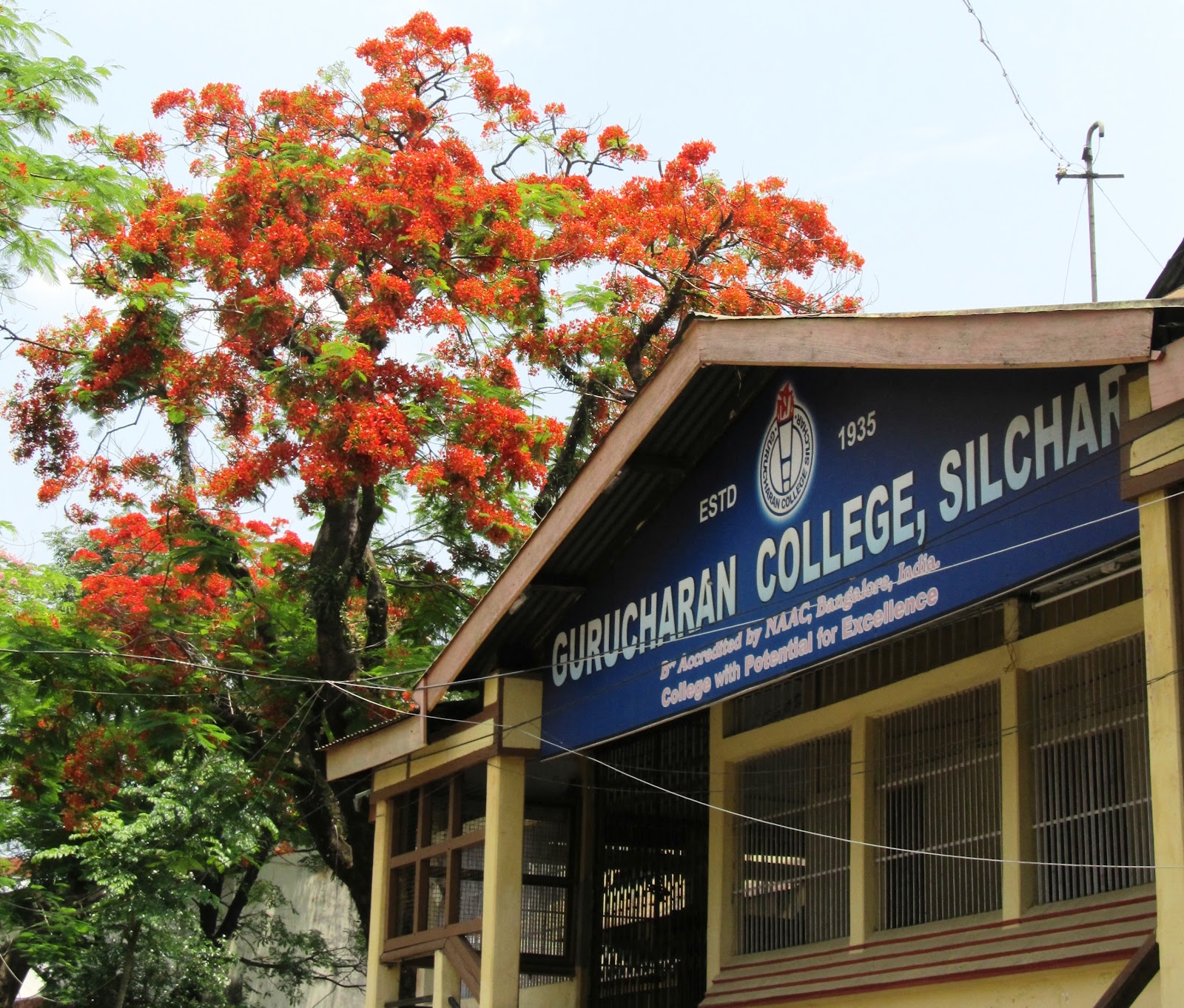
    Brief History of Gurucharan College


    Gurucharan College, Silchar, abbreviated as G.C. College, was established on 15 July 1935. Originally the college was housed in a deserted bungalow of Promode Chandra Dutta at Rongpur on the bank of river Barak. Unfortunately, riverbank erosion began to engulf the college premises, and Gurucharan College was shifted temporarily to the campus of Silchar Normal School. This temporary phase of accommodation was soon over and, with the help of insistence from different quarters, the school was able to acquire a vast area of about 7.1 acres (2.9 ha) in the Silchar Municipal area.
    The college started its mission with a mere 15 students on its roll; today it boasts of almost 3,000 students. Now, it is a full-fledged institution of higher education to the undergraduate level. It has attained a distinct identity of its own in the field of higher education in eastern India.
    Initially, the college had been affiliated to Calcutta University. In 1949, the college got affiliated to the Gauhati University. With the establishment of the Assam University (Central), Silchar, G.C. College has been affiliated to it since 1994. It is listed under 2(F) and 12 (B) by the University Grants Commission (UGC) and offers higher secondary (10+2) and three-year degree course (1+1+1) in its Arts, Science and Commerce streams.
    The college has been toiling for the last 75 years to provide access to higher education to the students of urban and rural areas of the north eastern region of India.

    Source: wikipedia &  www.gccollege.ac.in