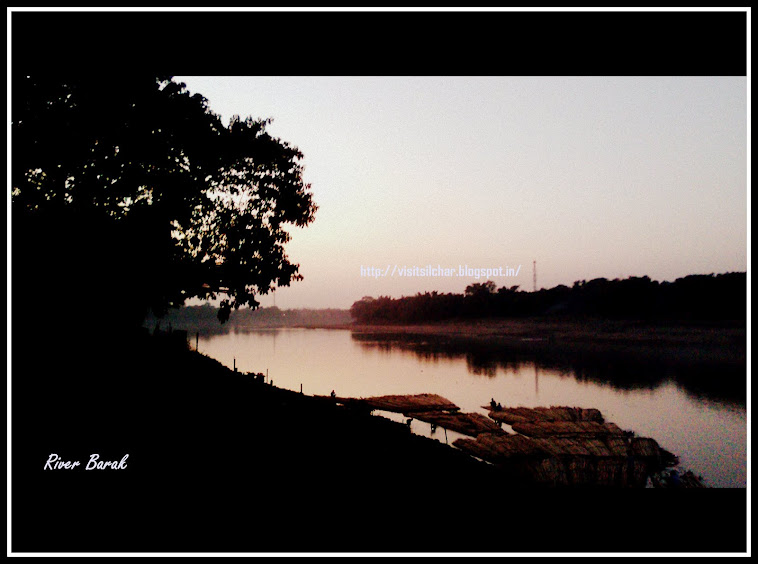
River Barak

River Barak
River Barak
Showing posts with label Education. Show all posts

Wednesday, January 2, 2013

NIT SILCHAR

National Institute Of Technology Silchar (NIT Silchar) , an Institute of National Importance under the NIT Act was established in 1967 as a Regional Engineering College (REC), Silchar. NIT Silchar is situated on the banks of river Barak. In the year 2002, it was upgraded to the status of an NIT from a Regional Engineering College(REC).
Regional Engineering College, Silchar was established in 1967 as a joint venture of Government of India and Government of Assam under the administration of a society registered under Society Registration Act XXI of 1860. The college was transformed into National Institute of Technology in the year 2002, and bestowed with the status of Deemed University by the Ministry of Human Resource and Development.
The multifarious reforms -that are being introduced from then by the reformed Board of Governors, delegated with a greater degree of autonomy for exercising its deliberation over diverse issues pertaining to cardinal matters ranging from academic to extracurricular excellence, are bringing about a tangible difference in the rudimentary paradigm of achieving a high standard in engineering education.
Identified as a Centre of Excellence by the Government of India, the institute is reinventing itself to crush the competition from its cotemporaries in various domains. Very optimistic developmental programs have been undertaken towards modernization of laboratories, computing facilities and library automation. Use of advanced teaching aids and computing facilities provide extensive scope for the students to attain a very high standard required in present day fast changing scenario of technology.
The campus of the institute is spread over an area of 540 acres, set amidst a sprawling landscape of natural quiteness, bordered on expansive tea gardens. It presents a spectacle of harmony in modern architecture, natural beauty and picturesque surroundings.
The campus area has been organized in three functional sectors:

  • Hostels for students
  • Instuctional buildings and administrative block
  • Residential sectors for the staff
  • The instructional buildings have been so located that these are fairly near to both the hostels and the staff quarters. There is a full-fledged computerized branch of State Bank of India, a Post-Office, and a number of telephone booths with STD/ISD facilities in the campus. The Institute has its own Dispensary with full-time and contractual basis Medical Officers to attend to the regular medical needs of the students, staff and their families. Patients suffering from serious illness, requiring intensive care, are referred to the Silchar Medical College & Hospital, which is only about two kilometers from the campus. An adequately equipped Canteen is there near the instructional zone and two more buildings for this purpose are under consideration one of which is now complete which will provide facilities to the students and the staff during and beyond the working hours. There is a well-eqipped Gymkhana and a Students Activity Center which are utilized by students for activities like bodybuilding, indoor games and similar other pursuits. At present, for the extra-curricular activities of the students and staff, there is an Institute hall with a sitting arrangement for an audience of around 500. The institute has 2 buses, which make morning and evening trips to Silchar town. City buses and Auto rickshaws ply between Silchar town and the institute campus.
    Functionally and aesthetically spread out, the campus aims at intellectual growth in an ambience that is free-flowing and community-frendly. The soothing breeze rustling through the naturally gifted lustrous greenery and bluish lakes is just one of the several ingredients that create an amzing atmosphere; just the right conditions essential to concentrate on studies.

    National Institute of Technology, Silchar, Assam, India, PIN:-788010
    Phone:-03842- 224879 | Fax:-03842-224797

    Silchar Medical College

     Silchar Medical College
     
    Silchar Medical College is a premier medical institution in the North-East region. Situated at Ghungoor a suburb of the city of Silchar , it has enjoyed a prestigious status in the country for its brilliant academic performances and excellent care for the suffering community. Every year it is imparting training for 100 graduates and more than 30 post-graduates, in various branches of medical science.   Silchar Medical College Hospital is having all important specialty departments. A large number of patients visit this institution for advanced treatment not only from Barak Valley region of Assam but also from neighbouring states like Manipur, Tripura, and Mizoram. The hospital with a capacity of more than 750 beds and over 800 patients are treated daily in the Out Patient Departments.

    This premier institution was first started in the vacant buildings of the Govt. Ayurvedic College at Jalukbari, Guwahati with 60 students for Gauhati Medical College and 40 students for Silchar Medical College as a twin college in August 1960.        
     
    In 1960 Govt. of Assam decided to shift the Silchar Medical College to Silchar. Site Selection Committee was sent, they selected Ghungoor, which was the land of Bhorakai T.E. . 8 K.M .away from Silchar town. But the progress was very slow and inconspicuous. In 1968, people of Silchar placed the demand to the then Honourable Health Minister Late Satindra Mohan Dev that Silchar Medical College should be shifted form Guwahati to Silchar.

    Dr.R.Goswami was sent to Silchar to start the Medical College with two office staff, Shri. D.N. Dutta and ShriA.M.Das Laskar One jeep was allotted for office. Shri Gajendra Das was its driver.
     
    Previously office was located at D.H.S. office Shillong ( Assam ). The office was shifted from Shillong to Silchar Circuit House on 10.8.68. The office was shifted from Circuit House to Boy's Hostel NO.1 at Ghungoor College Campus on 11.9.68. After a few days Sri D.Das joined in the office. The following grade-IV staff were appointed in the office of the Special Officer, Shri Jital Uria Bamurah, Sri Phani Bhattacharjee, Shri Liladhar Sharma, Shri Sudhir Ch. Das, Shri Nalini Kanta Das, Shri Prabhat Ch.Das and Shri Dakhan Ch. Dey. Shri K. B. Das was appointed the office Secretary.
     
    The memorable Foundation Day of Silchar Medical College was held on 15th August 1968 . The function was celebrated under the President ship of the Commissioner of Cachar and Chief Guest was Honb'le Health Minister S.M.Dev, who inaugurated the foundation ceremony. Representatives of Assam Medical College and Guwahati Medical College attended the function. Fifty students were admitted in Pre-Medical course in1968 at G. C. College . Professors and teachers were in Physics, Profs, P. B. Das, S. Sinha and Shri A. Deshmukhya, in Chemistry, Profs. B. Sinha, D. Talukdar and Shri S. Dhar, in Botany, Prof. S. Kar and S. K. Deb in Zoology, Prof. A.Bhowmick and Shri N. Shyam , in English Prof. S. Bhattacharjee. There was no Hostel building. Students had to reside in the Hostel of Govt. Higher Secondary School Boarding House, G. C. College and also in rented house. Within this term of Pre-Medical course preparation of Pre-Clinical and Para clinical classes were organized in Ghungoor Students Hostel No. 2. Of the first batch of Pre-Medical students all of them came out successfully and scored four top most positions including the First position. Teaching staff in the Anatomy deptt. were Prof. H. K.Das Biswas, Asstt. Prof. B. C. Das, teachers Dr. (Ms.) S.Dey, Dr. N. K. Purkayastha, and Dr. B. K. Dey. In Physiology, Asstt. Prof. P. C. Medhi, took the charge and after a few months Dr. N. H. Hazarika joined as Professor. Other teaching staff in the deptt. were Asstt. Prof. A. K. Dasgupta, teachers were Dr. D. Roy, Dr.S. K. Bhattacharjee, Dr. K. K..Chakarborty, and Dr. M. Shyam. Dr. M. K. Dhar, Dr. G. C.Barua and Asstt. Prof. N. C. Deka were staff of the Deptt.of Biochemistry. Prof. P. Goswami of Guwahati and Prof. R.Hussain of Assam Medical College took some classes in Biochemistry as Visiting Professors. Shri S. K. Kar and Dr.T. N. Chakraborty were teachers in Chemistry and Prof. B.K. Sinha of G. C. College used to take classes in Chemistry. To and fro conveyance from Silchar to Medical College was very meager. No dependable bus communication was set up.
     
    There were a few teaching staff, who used to come from town by an old Fiat car of Dr. B. K. Dey. Other clerical staff, most of them resided in the Hostel. One bus was allotted by the Assam Govt. in November 1971 and our conveyance problem was reduced. The driver of the bus was Shri Assaddar Ali and his assistant was Shri Renu Singh. In the vast land of hills and dales, local people cultivated paddy in some low areas of the campus. Only two Hostel buildings were bearing the existence of the college in the green virgin land. My vision was bewitched by the blue hills and soothing horizon in the midst of the greeneries and lakes. By and by Dr. R. Goswami became the Principal of the college. We attended the college through a graveled road which emerged from Hailakandi Road near Principal's Bungalow which was being constructed. Principal was residing in the rooms of the hostel. That road was discarded when new (present) road was opened. The old approach road was abandoned, where now the Nurses' hostel stands. The remnant of the old road is still peeping reminding our past. There was no separate girl's hostel. Girl Students got their accommodation in one of the blocks of the students’ hostel. Girl's hostel was constructed in the mid seventies and they were shifted there. Dr. B. C. Das was Superintendent of the Hostel's. There was no water treatment plant, a pond near the hostel provided the water to the college. The operator of the pumping station was Shri Anil Das.
     
    Paraclinical deptts. were started in the hostel building and Silchar Civil Hospital was converted for clinical classes in 1971. The construction of the Hospital building was started in the mid Seventies. Medicine deptt. and deptt. of Tuberculosis were first removed to the Assam type building in the permanent site. Dr. S. R. Bhattacharjee was the first Medical Registrar of the deptt. In the early part of the eighties all the clinical deptts. and office were removed to the permanent building. From July 1970 the clinical and paraclinical staffs were being appointed. In Medicine: Dr. D. N. Chakraborty as Professor, Dr. A. Swami as Asstt. Professor, Dr. R. Gupta and Dr. B. K. Das. In Surgery: Dr. A. K. Deshmukh as Professor, Dr. P. K. Choudhury as Asstt. Professor, Dr. S.K. Nandy Purkayastha and Dr. I. C. Das. In 0 & G : Dr. R.K. Das as Professor, Dr. Debidas Dutta and Dr. B. C. Kalita. In Opthalmology : Dr. H. N. Hazarika as Professor, Dr. S.R. Das as Asstt. Professor, Dr. A. C. Konwar and Dr. D. C.Baishya. In E. N. T.: Dr. C. Das as Professor, Dr. P. K.Goswami as Asstt. Professor, and Dr. A. Bhattacharjee. In Anaesthesiology : Dr. B. K. Sarma as Professor, Dr. R. M.A. Borah as Asstt. Professor and Dr. (Ms) P. Baruah(Dutta). In Radiology: Dr. D.C. Dowerah and Dr. A. K.Sharma. In Pathology: Dr. I. K. S. M. Baruah as Professor, Dr. K. K. Dasgupta as Asstt. Professor, Dr. S. K. Bhattacharjee and Dr. (Ms) S. Devi. In Microbiology: Dr. K. C.Bhuiyan as Asstt, Professor and Dr. B. R. Bhat!acharjee. In P& S.M : Dr. N. M. I. Rahman as Professor, Dr. P. N. Biswas and Dr. P. C. Barthakur. In F & SM Dr. M. N. Das, Civil Surgeon and Dr. J. Bhowal. In Pharmacology: Dr. A. M.Choudhury as Asst!. Professor and Dr. (MS) S. Das (Dutta).In Orthopaedics: Dr. H. Gogoi as Asstt. Professor.After a few years other departments were started. Dermatology &Venerology: Dr. K. K. Das as Asst!. Professor, Paediatrics: Prof. S.D.Barua and Dr.M.K.Chakraborty, Psychiatry: Asst!. Prof. Dr. P. N. Goswami, Dr. S. Dhar, Dentistry: Dr. D. K. Dey, Tuberculosis &Chest Diseases: Dr. G. K. Chakraborty, Cardiology: Dr. M. Nath as Asso. Prof. and Dr. D. Deb were appointed. Sr. Dorothy Kattakakathut was the first Matron of the college. All are the pioneers of their respective department. Shri B. K. Shyam was the Medical Record Officer and Shri Jyotirmoy Dutta, Photographer of the college. Shri Manoj Nandy Mazumdar the first Librarian of the college.
    In long 25 years many a stalwart of Medical arena of Assam adorned the chair the Principal. Dr. R. Goswami, founder Principal, Dr. D. C. Dowerah, Dr. N. Zaman, Dr. D.C. Choudhury, Dr. S. D. Barua, Dr. J. Mahanta, Dr. B. M.Goswami, Dr. C. Das, Dr. (MS) D. Dutta, Dr. P. C. Barua, Dr. S. Datta Roy and others. Dr. H. K. Das Biswas was the first Vice Principal of S. M. C, who joined the Deptt. of Anatomy as Professor in 1968.
     
    The first batch of final MBBS examinee appeared in 73. The first and third positions were occupied by Sambhunath Mukherjee and Prasanta Nath Barbhuiya respectively. In the last 25 years our students topped the list in 1st, 2nd and Final MBBS examinations and also secured positions in many of the examinations of Gauhati University . Ms. Bandana Dey is the first lady who graduated from this college.
     
    Post-graduate course in different subjects are opened and seed of which was planted in 15th Aug'1968 now thrived into a big tree but not a banian tree which is yet to be achieved. The staff and students took terrible pain, trouble and had to over come many hurdles to bring the college into the present shape. They had to go on several occassions for their legitimate demands. The first annual magazine 'Vishak' was published in 1974 and after a year wall magazine 'Sreejani' came up. From 1969 to 1974 College was inspected time to time by University Inspectors and Medical Council of India. Silchar Medical College was recognised by M.C.I. in 1974.
     
    Silchar Medical College and Hospital was established in the year 1968. It has been serving the ailing humanity of the region from the very day of its inception. During the last three decades it has produced a huge number of brilliant medical graduates who are discharging their duty to the society with distinction. As such the Institute has been trying its best to catch up with the advancement in the field of modern medicine as far as practicable. However we are yet to see the expected growth to its full potential mainly because of financial constraints and geographical isolation of this valley from other parts of the country.
     
    At the moment the college has the capacity of
    100 admissions into the MBBS curse,
    25 admissions in P.G. Degree, and
    7 admissions in P.G. Diploma courses.
     
    The bachelor degree (MBBS), MD in General Medicine and Diploma in ENT (DLO) were already recognized by the MCI (Medical Council of India) in the year 1988. Recognition for the degree and diploma courses in all other specialties were kept pending till last Inspection by the MCI in Feb and May 2005. They have very recently accorded recognition to the PG courses in General Surgery, Ophthalmology, Psychiatry and Otolaryngology. Currently the Institution has 8 Basic science departments and 19 clinical departments. PG courses in the departments of Radio-diagnosis, Pathology, Anaesthesiology and Orthopaedic have been permitted by the MCI.
    Saturday, May 12, 2012

    Brief History of Women's College

    The history of Women's College is entwined with the history of Women education in undivided Cachar district after independence. Along with the rest of the country, the independence and partition of India brought a dramatic upheaval in political, social and economic life of Barak Valley - a region still not easily accessible. The security and comfort of the agrarian life-style got disturbed and women had to come out to shoulder equal responsibility of earning a living. To acquire both employability and intellectual capability, women needed to be educated and two existing colleges - Gurucharan College (1935) and Cachar College (1960) could not bear the influx of so many aspiring minds. Many intellectuals and social workers of that period thus felt a need to open a college exclusively to cater for the higher education needs of the women.
     

    This feeling was given a shape of a movement by the dedicated effort of Late Dhirendra Mohan Deb who was sincerely supported by eminent persons like N.C. Shyam, Late J.C. Purkayastha, Late Dr. Sudhangshu Nath and others.
     

    The first meeting for organizing the Women's College was held on July 31st, 1963 in the Normal School premises of Silchar and was attended by some twenty-two educationalists, officials, social and political workers. The meeting resolved to start 'Women's College', Silchar from 1st of August, 1963 in the premises of Normal School in morning shift. Late D.C. Dutta was appointed as Principal and teachers of other institutions promised voluntary service to teach the students of this newly founded institution. The year 1963 had put a landmark in the history of women education in Barak Valley.
     

    With sincere love and co-operation from the education loving people of Silchar, the college steadily continued its journey and got affiliated to Gauhati University. In 1964 the college acquired land from Brahma Samaj, Silchar and in 1968, it was shifted to its present site. In 1972, the college received grant-in-aid and on 1st January, 2005 it has been provincialised.
     

    There has been a significant growth in the number of students over the years and the institution has become a famed centre of higher education for women. Women's College is situated in the heart of the town and hence is well-connected with the localities around. It is trying to achieve excellence in teaching - learning and extension activities through its emphasis on 'quality in every activity'.. It is providing a wide range of employment oriented vocational and non-formal courses to meet the changing needs of the globalize world. Women's College is imparting training of ethical values to its students to make them self-confident and socially responsible. Women's College is continuously trying to make new initiatives to keep its students updated in every sphere.

    Silchar Collegiate School


    Arise!Awake!And stop not till the goal is reached
    -Swami Vivekananda 


     Estd-1974,
    R.K.Mission Road
    School Song
    Under the standard of our school glory, honour reign,
    Guiding our steps in the path of truth
    Teaching, play the games,
    Virtue and knowledge be our stars,
    Victory our aims, planting the seeds of truth,
    And good deeds of Collegiate School fame,
    Alma Mater let the flag unfold,
    Stand brave,stand true
    Under the White and grey.        

    Friday, May 11, 2012

    History of Assam University


    The history of Assam University is the history of people's struggle for higher education. The people of Surma Valley (known during the time of British India) saw two partitions in a century --- one isolated them from their ethnic link with Gangetic Bengal and ensued a forced merger with Assam state by the then British Rulers. The second partition that created Pakistan in 1947 truncated the Valley by taking away 4 out of 5 subdivisions of Sylhet district. So the Surma division was lost for ever and newly defined Barak Valley came into being comprising Cachar, Karimganj and Hailakandi districts.

    The partition of India brought to the people of Barak Valley an insurmountable economic hardship, cultural alienation and separation from their nearest kins living on the other side of the international boundary. Till 1947 the colleges of Barak Valley were affiliated to Calcutta University but the partition of India brought out logistic problems. When Gauhati University was established in 1948 following the independence, the colleges in Barak Valley were affiliated to it, solving hardly its logistic problem. With this growing sense of discontentment, the people's wrath was further aggravated when Assam Legislative Assembly introduced a bill to make Assamese the only official language of the state. It meant denial of Bengali, the second major language spoken in Assam and which constitutes the major language group in Barak Valley. Consequently, people of Barak Valley set off a democratic language movement for due recognition of their mother tongue. At the height of the movement, eleven youths were killed by police firing at Silchar on May 19, 1961. This incident inspired the people to take vow for having a University of their own. The demand was further augmented when Gauhati University sought to introduce Assamese as the only medium of instruction at University level. This led to another mass movement at Barak Valley which saw similar repression and killing. Two youths at Karimganj were killed by police on 21 July 1986, many suffered jail confinement while some were injured and rendered incapacitated. Assam Government at a point of time offered a State University for Barak Valley, but it was turned down outright by the people as they saw nothing except a central university could fulfil their aspiration for national education, and put them into the mainstream of Indian life. The yearning for remaining into the mainstream of Indian life is no doubt the uniqueness of character of the people of Barak Valley. They are peaceful and strictly committed to democratic values and against separatism.

    Later on, as a result of the struggle of the people of this region the Assam University Act was passed by the both Houses of Parliament in May 1989 and it received the assent of the President of India in the same month. The University having jurisdiction over all three districts in Barak Valley and two neighbouring hill districts, viz. North Cachar Hills and Karbi Anglong started functioning from January 21, 1994.


    Courtesy: http://assamuniversity.tripod.com/assam2.htm

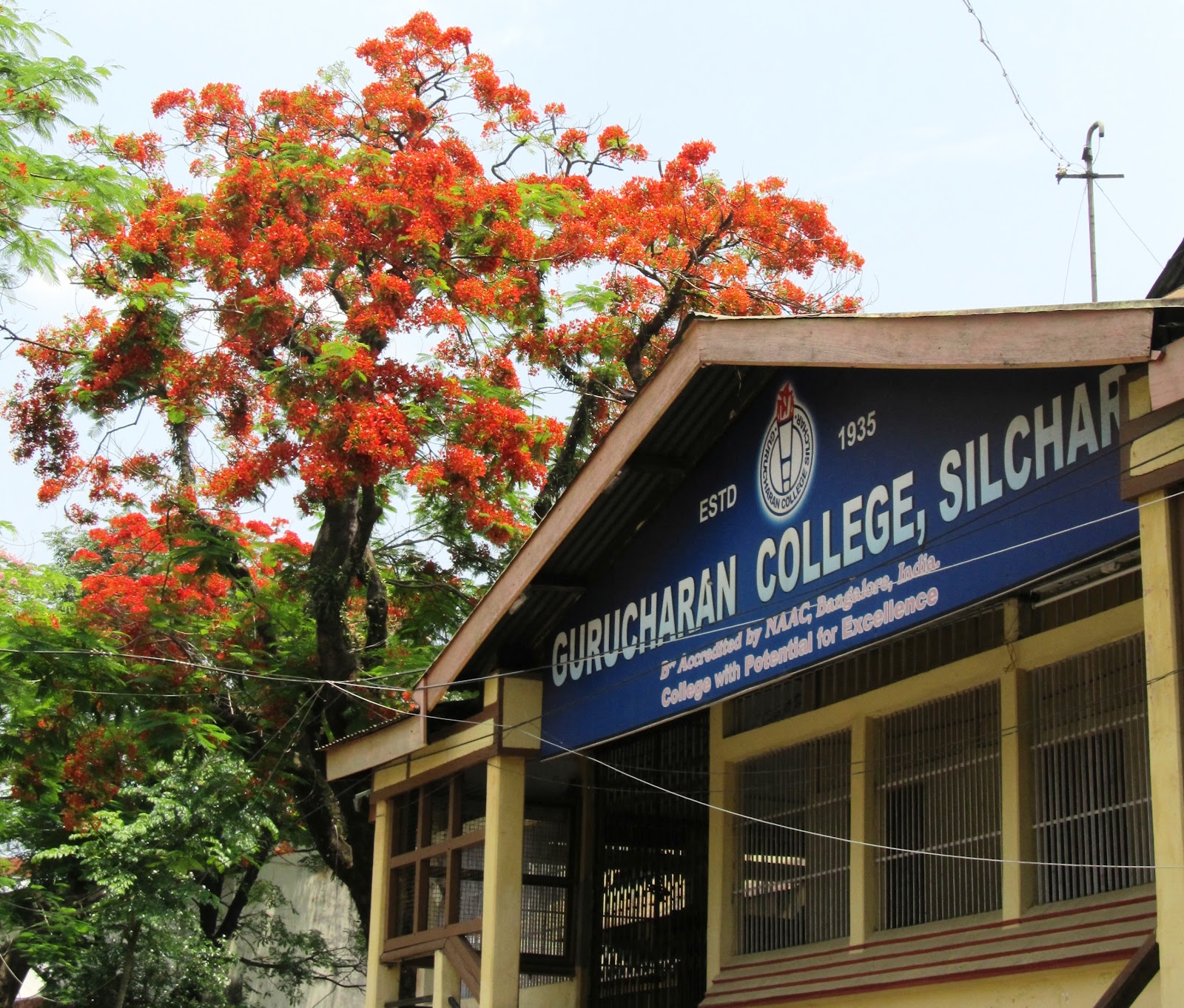
    Brief History of Gurucharan College


    Gurucharan College, Silchar, abbreviated as G.C. College, was established on 15 July 1935. Originally the college was housed in a deserted bungalow of Promode Chandra Dutta at Rongpur on the bank of river Barak. Unfortunately, riverbank erosion began to engulf the college premises, and Gurucharan College was shifted temporarily to the campus of Silchar Normal School. This temporary phase of accommodation was soon over and, with the help of insistence from different quarters, the school was able to acquire a vast area of about 7.1 acres (2.9 ha) in the Silchar Municipal area.
    The college started its mission with a mere 15 students on its roll; today it boasts of almost 3,000 students. Now, it is a full-fledged institution of higher education to the undergraduate level. It has attained a distinct identity of its own in the field of higher education in eastern India.
    Initially, the college had been affiliated to Calcutta University. In 1949, the college got affiliated to the Gauhati University. With the establishment of the Assam University (Central), Silchar, G.C. College has been affiliated to it since 1994. It is listed under 2(F) and 12 (B) by the University Grants Commission (UGC) and offers higher secondary (10+2) and three-year degree course (1+1+1) in its Arts, Science and Commerce streams.
    The college has been toiling for the last 75 years to provide access to higher education to the students of urban and rural areas of the north eastern region of India.

    Source: wikipedia &  www.gccollege.ac.in

    Thursday, May 10, 2012

    List of Educational Institutions

    • Guru Charan College
    • Cachar College
    • Radhamadhab College
    • Ramanuj Gupta Memorial Junior College
    • Hemangini College
    • Vivekananda College
    • Aryan College
    • Silchar Collegiate School
    • Holy Cross School
    • South Point School
    • Oriental High School
    • Maharishi Vidya Mandir
    • Don Bosco School
    • Pranabananda Holy Child School
    • Daffodils School
    • Adhar Chand Higher Secondary School
    • Cachar High School
    • Muktashree High School
    • Pranabananda Vidya Mandir
    • Kendriya Vidyalayas
    • Govt. Boys School
    • Govt. Girls School
    • Narsing School
    • Ramanuj School
    • New Oxford School 
    • Assam University Silchar 
    • NIT Silchar
    • Womens College
    • R.K Degree College
    • Durgasankar Pathsahala
    • Kulodasundori Pathshala
    • Happy Home (Nursury) School
    • Chhotolal Seth Institute
    • A.K  Chanda Law College
    • Silchar Polytechnic
    • Sri Sri Radhamadhav Balika Vidyalay
    • Shyama Charan Deb Vidyapith
    • MYC High School 
    • Deshabhakta Tarunram Phukan Higher Secondary School